Sunday, April 6, 2014

Good Reading - Kathleen Geier

I am really enjoying reading Kathleen Geier's work lately.  

Here she is at her every-other-weekend gig at The Washington Monthly's Political Animal blog. 

A post at The Baffler discussing Michael Lewis's new book and the rigged game of high-frequency trading

A list of her work at The Nation.

I think she's doing some of the best work on economic inequality out there.  And she is relentless in focusing on this issue. 

Native Plants I Love

Cercis canadensis (Common Name: Eastern Redbud Tree)

An absolute stunner, and a welcome sign that spring is finally here. Redbuds are deciduous, understory trees found throughout central and eastern North America, from Canada down to Central America. They are typically found in open woodlands and woodland margins, which makes redbuds great landscaping trees because they can take full sun and part-shade. 

The common name comes from the red color of the flower buds (duh), but the flowers themselves are a beautiful rosy purple. They flower on bare branches before almost every other native woody plant, providing us with all of those stunning flashes of purple as we drive down the highway this time of year. Redbuds prefer moderately fertile soil with regular moisture, but not wet or poorly-drained locations. They also do not like to be transplanted, so plant while young and leave undisturbed.

If you are looking for a showy tree for your yard, try this home-grown beauty in place of Yoshino cherries or Bradford pears.

Buds just starting to flower on the tree in our front yard

"Forest Pansy" is a striking cultivar featuring purple leaves tinged with green

Saturday, April 5, 2014

A Little Sweetness on a Saturday

I think I'll make some s'mores.


When Science Isn't Enough

Author and environmental activist Bill McKibben penned an interesting call to arms to scientists upon the recent release of an Intergovernmental Panel on Climate Change (IPCC) report. When the science is in, and the results are clear, and the results indicate a looming catastrophe, is the scientist's work done when the science is done?

McKibben makes the argument that all of us have two jobs: our day job as scientists or carpenters or teachers or stay-at-home-moms, but we also have a second job, that of citizen. And it is as citizens that we are failing at our jobs, because the politicians we are responsible for electing continue to make choices that are (literally) going to be the death of millions of us down the line.  As McKibben puts it:
it’s perfectly clear by now that you can’t scare politicians with the news that the world is ending. It’s going to require convincing them that something they really care about might disappear: their jobs.
With hundreds of millions of dollars funneling into the political system from fossil fuel companies and individual billionaires who own/are heavily invested in these companies, the deck is heavily stacked in favor of doing nothing, and gong about the business of making the planet largely uninhabitable. For citizens who accept the science and understand the consequences, the big question is what are we doing to effect change? What can we do? How can we get the political system to be responsive to reality? I don't know the answer to these questions, but sitting out the fight isn't the answer for sure.

350.org

Stop the Keystone XL Pipeline Project

Call your Representative and Senators and tell them you vote on climate change.

Friday, April 4, 2014

Relatively Recently Read


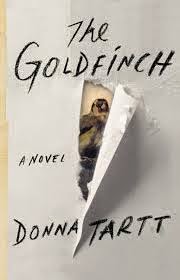
At over 750 pages, The Goldfinch requires a significant investment of time and effort. Fortunately, it is more than worth it. Donna Tartt's first novel in more than a decade is a meditation on friendship, loss, loyalty, family, and the intoxicating power of art. It is also a gripping story of a young man trying to make his way in the world after the death of his mother. And it is beautifully written. I mean stop-in your-tracks to reread sentences, beautifully written.

Thanks to my husband for getting me this one for Christmas.


What's Wrong With This Picture?

A few weeks ago, some friends and I were talking about a piece in the Sunday Times about the lack of publication of children's books by people of color. The numbers were really eye-opening (and depressing). The author of the piece, Christopher Myers, writes movingly of the effects of not seeing yourself in the stories you read, and wonders why, despite the many mission statements about a commitment to diversity, in 2013, out of 3,200 children's books published, only 93 were about black people. The reason Myers is given for this discrepancy by members of the publishing industry and booksellers with whom he speaks, is The Market - that vague and unaccountable force that tells us only books about white people will sell.

In the course of our conversation, in thinking about the importance of who controls the levers of production to what actually gets produced, my friends and I brought up the Bechdel Test and the problem of women's invisibility in the movies, despite the fact that women are a majority of people who exist on the planet. We knew that the industry is dominated at all levels by men, and that it was unsurprising, therefore, that their stories would be the ones getting told. We had also heard, like Christopher Myers, that The Market was dictating what gets produced - that boys and men won't watch stories with girls and women, particularly in that all-important international market. 

So it was with real interest that I dove into a piece by Walt Hickey at FiveThirtyEight that takes a good hard look at the numbers comparing films that passed and failed the Bechdel Test.
Using Bechdel test data, we analyzed 1,615 films released from 1990 to 2013 to examine the relationship between the prominence of women in a film and that film’s budget and gross profits. We found that the median budget of movies that passed the test — those that featured a conversation between two women about something other than a man — was substantially lower than the median budget of all films in the sample. What’s more, we found that the data doesn’t appear to support the persistent Hollywood belief that films featuring women do worse at the box office. Instead, we found evidence that films that feature meaningful interactions between women may in fact have a better return on investment, overall, than films that don’t.
The whole article is worth a read for the great way it both points out the outrageous lack of meaningful representations of women in film, and explodes all the usual reasons given for why women's stories just can't be told. To emphasize this last point, he also throws in great data on just how completely skewed the numbers are with respect to men being in control of the movie industry.

Actress and activist Geena Davis has also been doing great work on the problem of gender inequality in the media, particularly in children's media.

Power From the People

Ed Kilgore at The Washington Monthly had an interesting piece yesterday examining what he terms "the constitutionalization of privilege":
But in the broadest possible perspective as a landmark for the judicial wing of the ascendent conservative movement, it [the McCutcheon v. FEC decision] represents another step towards what might be called the “constitutionalization of privilege”—another piece of public life taken out of the give-and-take of democratic politics and enshrined behind the golden wall of an expanded notion of constitutional rights. It’s not just happening in the specialized area of campaign finance regulations. As Haley Sweetland Edwards observed in her important Washington Monthly article earlier this year on “The Corporate Free Speech Racket,” the same jurisprudence underlying such SCOTUS decisions as Citizens United and now McCutcheon is being deployed to take away government’s powers to regulate corporations generally.
At both the federal and state levels, conservatives are increasingly attempting to take vast swathes of policy-making out of the hands of lawmakers (and the citizens who elect them) by declaring them constitutionally off-limits. Yet more evidence that conservatives know they cannot enact their ideology through a legitimate legislative process (which depends on winning over a majority of voters), so they will simply enact it any way they can.